

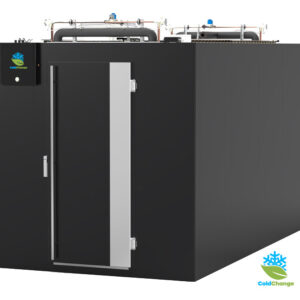
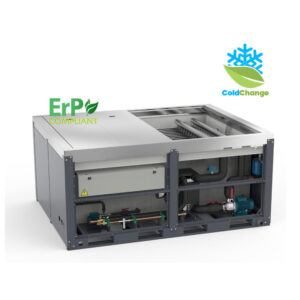
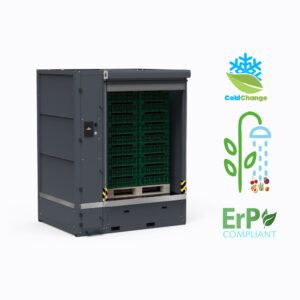
16 Pallet Eco Vacuum Cooler
This Eco model is designed for high-volume packhouses that need sixteen-pallet batches and want the vacuum and refrigeration plant engineered around the actual cooling duty and operating pattern.
Standard and Eco design comparison
For a sixteen-pallet packhouse, coordinated plant controls and loading logistics are central to an Eco feasibility review. Compare complete-system electricity and throughput across representative shifts, including idle and turnaround periods where relevant.
Compare the standard 16-pallet vacuum cooler · Eco range overview · Request an application-specific Eco quotation.
Eco engineering focus
- Variable-speed vacuum pumping
- Application-matched refrigeration duty
- PLC/HMI recipes for repeatable cooling cycles
- Review of site power, ambient conditions and daily throughput
Project sizing
Final equipment selection will be based on product characteristics, batch mass, temperature pull-down, packaging, required cycles per hour and local utilities. No unsupported fixed savings percentage will be stated.
16 Pallet ECO Vacuum Cooler
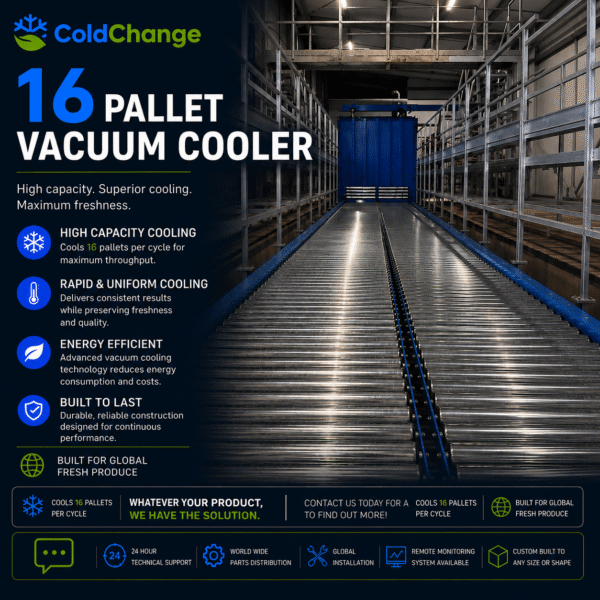
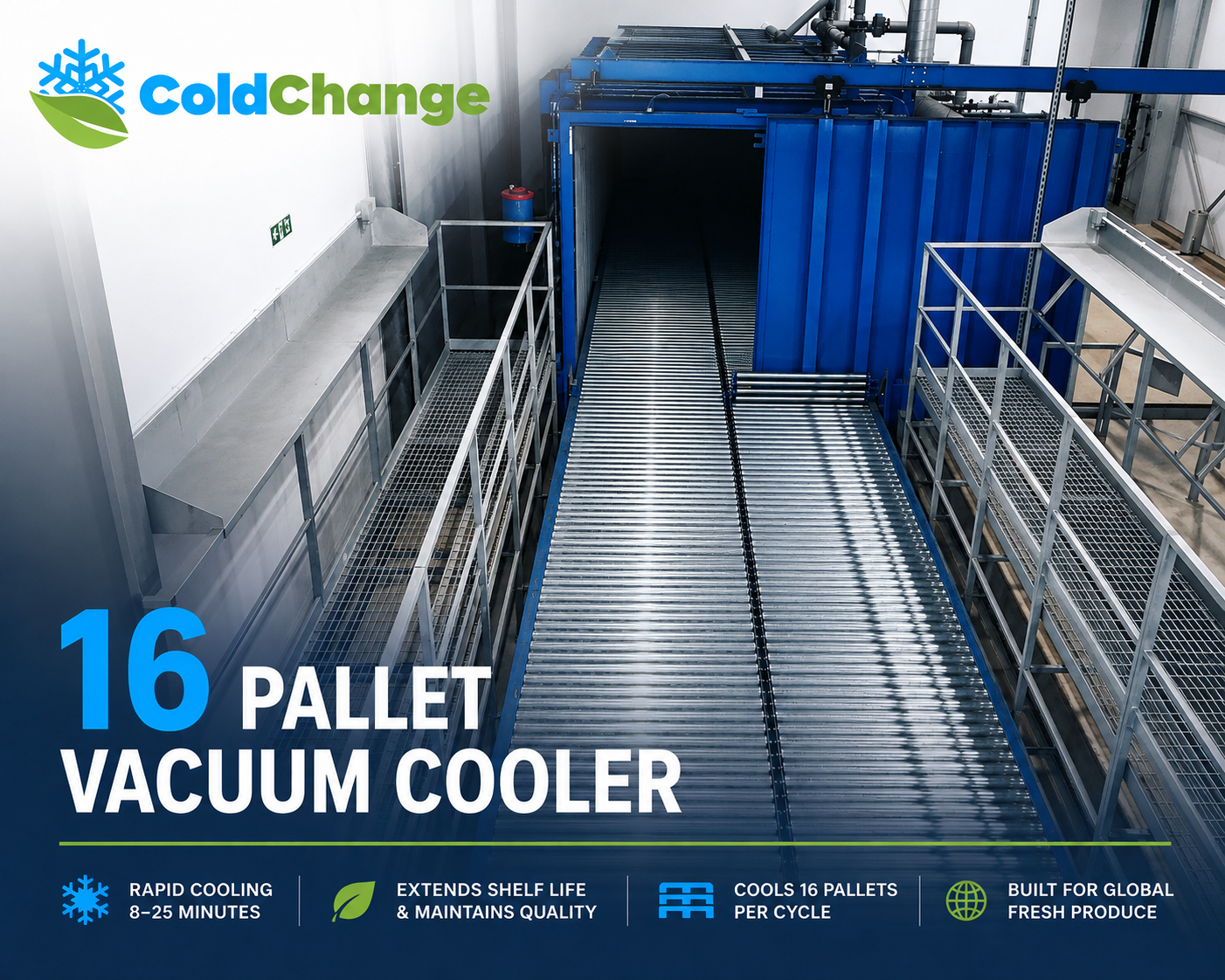
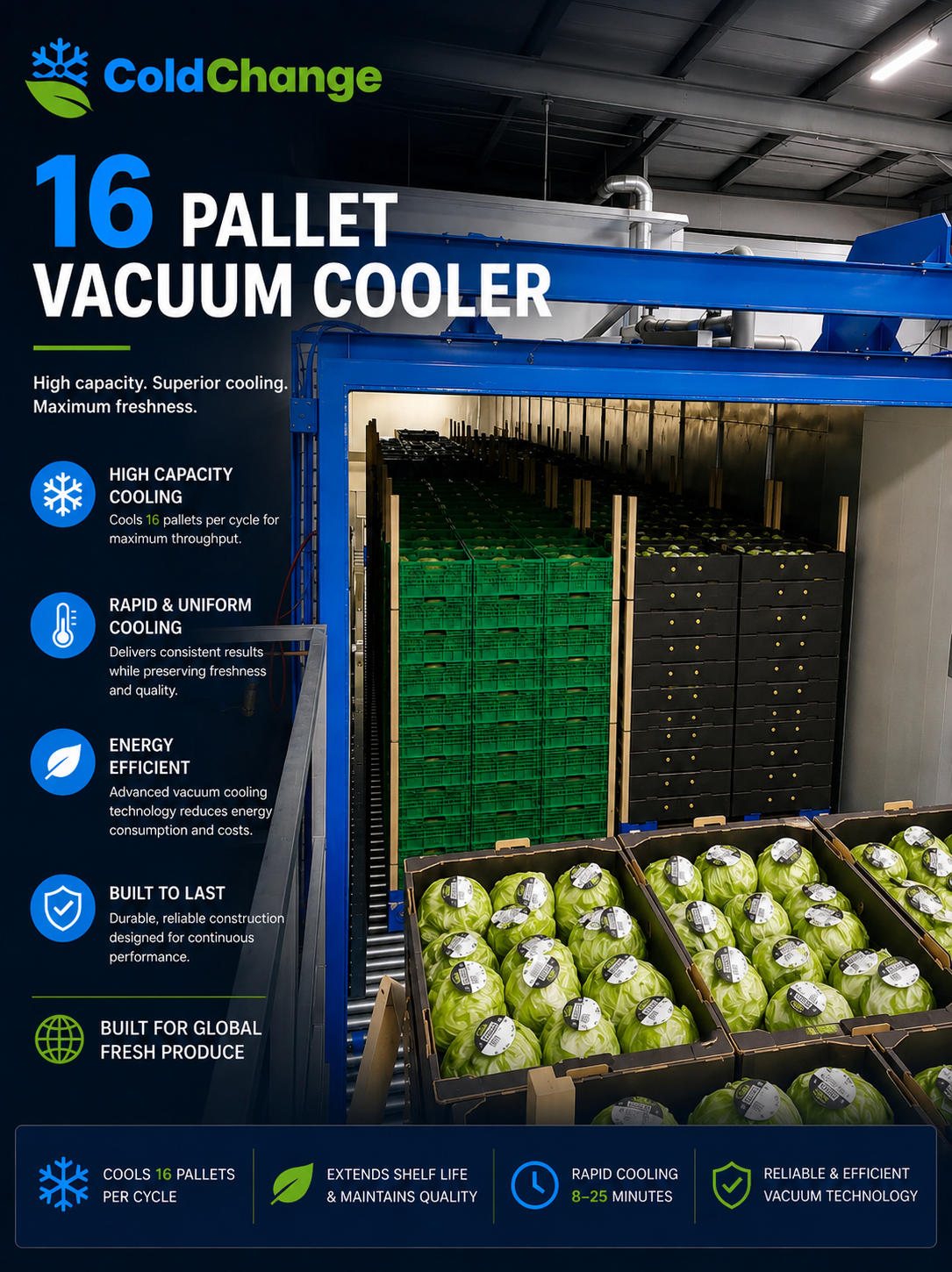
The 16 Pallet ECO Vacuum Cooler is intended for high-volume operations that want to evaluate energy use as part of the complete batch-cooling process. The chamber format accommodates sixteen pallets per batch, while the vacuum, refrigeration and control systems are selected around the actual product, packaging, throughput and site conditions.
“ECO” describes the engineering approach rather than a fixed savings claim. The design review looks at when pumping capacity is required, how condensation duty changes through the cycle and how the plant is expected to run across full, partial and idle periods. This produces a project-specific operating basis that can be compared with the standard 16 Pallet Vacuum Cooler.
Start with the production schedule
A sixteen-pallet chamber is most useful when its batch pattern fits the wider packing and dispatch plan. Before equipment selection, Cold Change reviews the required pallets per hour, the number of operating shifts, the expected product mix and the time allowed between loads. Peak days and seasonal variations matter, as do loading delays, sanitation windows and planned idle periods.
This planning step avoids treating chamber capacity as the only design variable. Two sites loading the same number of pallets may require different vacuum and refrigeration arrangements if their products, initial temperatures, target temperatures or daily schedules differ. Batch weight, pallet dimensions and packaging airflow are therefore confirmed at quotation rather than assumed from the chamber name.
Variable-speed vacuum pumping
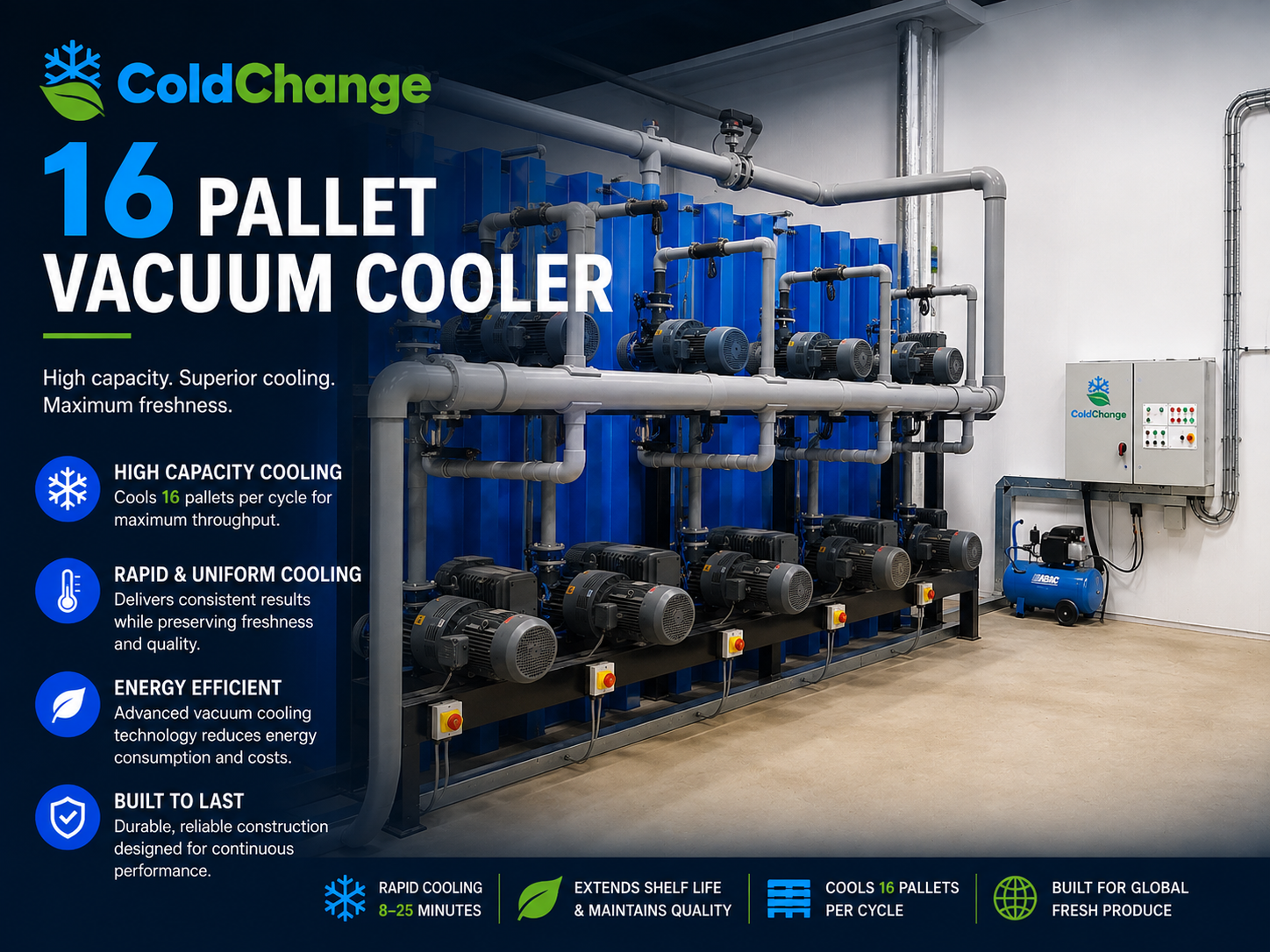
The ECO configuration can use variable-speed vacuum pumping so that motor output follows the required evacuation profile instead of operating at one fixed level throughout every stage. The control strategy is developed around the selected pumps, product load and process sequence. Its purpose is to match available pumping capacity to the duty while maintaining the required process control.
Actual electrical consumption depends on the complete installation and the way it is operated. For that reason, any comparison with a standard configuration should use an agreed operating profile, equipment schedule and measurement boundary. Cold Change does not apply a universal energy-saving percentage to every sixteen-pallet project.
Refrigeration and condensation duty
Vacuum cooling removes heat through moisture evaporation, and the resulting vapour must be managed by the condensing system. Refrigeration duty is assessed alongside the evacuation sequence, not as an isolated nameplate value. Product load, starting condition, target temperature, ambient conditions and batch frequency all affect the project requirement.
For a production line running repeated batches, the review also considers recovery between cycles and the effect of the planned daily schedule. Where production varies, the design basis can include both peak and partial-shift cases. This helps the selected equipment reflect the intended workload without presenting a generic performance figure as a guaranteed result.
Controls for repeatable operation
PLC and HMI controls provide the operator interface for recipes, cycle stages, alarms and operating information. Recipes can be developed for different products or load conditions after commissioning data is available. Access levels and set-point limits can also be agreed during the controls review.
The control system is intended to support consistent operation and a clear record of the chosen process. Final instrumentation, data logging, remote access and plant-integration requirements are project options and should be defined before manufacture. They are not assumed to be identical at every site.
Loading and site integration
The chamber must fit the real material flow around it. The project review covers available floor space, door approach, pallet movement, drainage, service access and the relationship with upstream and downstream equipment. Manual loading, conveyor interfaces or other handling arrangements can be reviewed where specified.
Electrical supply, ambient design conditions and available utilities are checked as part of the quotation process. The same applies to installation access and maintenance clearances. These details can change the most suitable arrangement even when the nominal chamber capacity remains sixteen pallets.
Product and packaging suitability
Vacuum cooling is particularly relevant where the product can release moisture under reduced pressure and the packaging allows vapour to move effectively. Suitability cannot be determined from pallet count alone. Product structure, moisture behaviour, pack format, liner configuration, vent area and pallet build all influence the cooling response.
Cold Change uses available application data and, where appropriate, trial information to establish the project basis. If the product or packaging changes materially, the operating recipe and expected result may also change. Any quoted performance should therefore be tied to the agreed product and load definition.
How to compare the ECO and standard designs
The standard and ECO versions serve the same sixteen-pallet batch category but provide different engineering routes. A useful comparison should include the proposed vacuum equipment, refrigeration arrangement, control philosophy, expected batch schedule, installed electrical requirements and agreed operating assumptions.
Energy should be compared over a defined production period rather than inferred from a single component or marketing label. Where operating data is available, Cold Change can help establish a baseline and identify what will be measured. The appropriate choice may depend on throughput stability, product mix, operating hours, site utilities and the customer’s investment priorities.
Information needed for a project quotation
- Product type, variety and condition at loading
- Maximum and typical pallet weights
- Pallet dimensions, packaging format and venting details
- Starting and target product temperatures
- Required pallets per hour and batches per shift
- Peak, typical and seasonal production schedules
- Available electrical supply and relevant site utilities
- Ambient design conditions and installation location
- Preferred loading method and any conveyor interfaces
- Control, data logging and integration requirements
These inputs allow the chamber, vacuum pumps, condensing system and controls to be assessed as one operating system. Final dimensions, components, performance commitments and commercial terms are confirmed in the project quotation.
See the full vacuum cooler range, compare the standard 16 Pallet Vacuum Cooler, or request a project quotation with your product and production details.



Bewertungen
Es gibt noch keine Bewertungen.