

Vacuum Cooling Lettuce – What Is the Best Way to Rapidly Cool Lettuce After Harvest?
Vacuum cooling lettuce rapidly after harvest is essential for commercial growers who need to reduce field heat and bring freshly harvested lettuce to the correct storage temperature while maintaining quality, freshness and shelf life.
Vacuum cooling lettuce is one of the fastest methods available for removing field heat from large quantities of freshly harvested produce.
For iceberg lettuce, romaine, cos and other leafy vegetables, a commercial lettuce vacuum cooler can rapidly and uniformly reduce product temperature across complete pallet loads before the lettuce enters refrigerated storage or distribution.
For growers looking for a vacuum cooler for lettuce, lettuce cooling system, lettuce cooling machine, vegetable vacuum cooler or commercial vacuum cooling system, understanding the different cooling methods can help determine the best solution for their operation.
Cold Change supplies a complete range of vacuum cooling systems for lettuce, vegetables and other fresh produce.
Why Does Lettuce Need to Be Cooled Quickly After Harvest?
Lettuce remains biologically active after harvesting.
Once removed from the field, temperature management becomes one of the most important parts of maintaining its condition through packing, storage, transportation and retail.
This makes lettuce pre cooling an important stage of commercial post-harvest handling.
Rapidly removing field heat can help:
Maintain lettuce quality
Maintain crispness and appearance
Reduce deterioration after harvest
Reduce the refrigeration load on cold stores
Improve consistency between batches
Support longer commercially useful shelf life
Reduce post-harvest losses
Improve cold-chain performance
The objective isn’t simply to put freshly harvested lettuce into a cold environment.
The objective is to remove the heat from the lettuce itself as quickly and uniformly as practical.
This is where vacuum cooling becomes particularly interesting.
What Is Vacuum Cooling Lettuce?
Vacuum cooling works very differently from conventional refrigeration.
Pallets of freshly harvested lettuce are loaded into a sealed vacuum chamber.
Powerful vacuum pumps progressively reduce the pressure inside the chamber.
As pressure falls, the boiling point of water also falls. A very small quantity of moisture within and around the lettuce begins to evaporate at a low temperature.
Evaporation requires energy.
That energy is taken from the lettuce itself in the form of heat, producing a rapid reduction in product temperature.
Because the pressure reduction occurs throughout the chamber and around the product, vacuum cooling vegetables can provide extremely rapid and comparatively uniform cooling across large commercial loads.
This is why lettuce has become one of the best-known applications for commercial vacuum cooling.
Why Is Lettuce Particularly Suitable for Vacuum Cooling?
Lettuce has characteristics that make it particularly well suited to vacuum cooling.
Its relatively high moisture content and leafy structure allow evaporative cooling to take place effectively.
This is particularly relevant for iceberg lettuce vacuum cooling, although the technology can also be applied to romaine lettuce, cos lettuce and other leafy produce where the product and packaging are suitable.
Vacuum cooling of lettuce has been commercially studied for decades.
Research has examined factors including:
Vacuum pump capacity
Refrigeration capacity
Starting product temperature
Target temperature
Product weight
Packaging
Chamber pressure
Cooling time
This means commercial lettuce vacuum cooling isn’t simply a theoretical method of cooling vegetables.
It is an established post-harvest cooling technology.
Iceberg Lettuce Vacuum Cooling
Iceberg lettuce vacuum cooling is one of the most recognised applications of vacuum precooling.
A grower searching for an iceberg lettuce vacuum cooler, vacuum cooler for iceberg lettuce, iceberg lettuce cooling machine, iceberg lettuce pre cooler or vacuum cooling iceberg lettuce is generally trying to solve the same problem:
How can large quantities of freshly harvested lettuce be cooled rapidly before cold storage and distribution?
With conventional air cooling, cold air must gradually penetrate cartons, packaging and individual lettuce heads.
Vacuum cooling removes heat differently through controlled evaporation under reduced pressure.
This can make an iceberg lettuce vacuum cooler particularly attractive to large growers, pack houses and fresh-produce businesses handling substantial daily volumes.
What Is the Best Way to Cool Lettuce After Harvest?
There isn’t one cooling system suitable for every farm.
The best way to cool lettuce after harvest depends on the product, production volume, packaging, starting temperature, required final temperature and available cooling time.
Common methods include:
Conventional cold-room cooling
Forced-air cooling
Hydrocooling
Hydro-vacuum cooling
Vacuum cooling
For high-volume operations where extremely rapid cooling is required, vacuum cooling lettuce can offer significant advantages.
Vacuum Cooling vs Cold-Room Cooling
A conventional cold room is essential for storing chilled lettuce, but storage and precooling are different jobs.
Putting warm pallets directly into a cold room means the refrigeration system must remove field heat from the product while simultaneously maintaining the required room temperature.
Heat must also transfer from the lettuce through cartons, crates and pallet loads into the surrounding air.
A vacuum cooling machine for vegetables is designed specifically to remove that initial product heat rapidly.
Once precooled, the lettuce can then move into the cold room for temperature maintenance.
In many operations, therefore, the question isn’t necessarily vacuum cooler or cold room.
The two systems perform different but complementary jobs:
Vacuum cooler = rapid pre-cooling
Cold room = chilled storage
Cold Change provides a range of pre-cooling equipment for different fresh-produce applications.
Vacuum Cooling vs Forced-Air Cooling Lettuce
Forced-air cooling improves upon basic room cooling by deliberately moving refrigerated air through or around cartons of produce.
It can be an effective method for many products.
However, airflow resistance, carton design, vent positions, pallet configuration and product density can all influence cooling performance.
Vacuum cooling doesn’t rely on refrigerated air travelling from the outside of a pallet toward its centre in the same way.
Instead, pressure reduction takes place throughout the chamber.
For high-throughput lettuce operations, the speed and uniformity achievable with a correctly designed commercial vacuum cooler can therefore be particularly attractive.
Vacuum Cooling vs Hydrocooling Lettuce
Hydrocooling removes heat by bringing produce into contact with chilled water.
It can provide rapid heat transfer and is widely used with suitable crops.
Vacuum cooling achieves cooling through controlled evaporation under reduced pressure instead.
The most appropriate technology depends on:
Crop type
Packaging
Required throughput
Hygiene requirements
Water availability
Existing refrigeration equipment
Available utilities
Pack-house layout
Hydro-vacuum cooling can also be considered where controlled water addition forms part of the process.
Can Vacuum Cooling Help Extend Lettuce Shelf Life?
Rapid temperature reduction is an important part of maintaining harvested lettuce quality.
Reducing the amount of time freshly harvested product spends at elevated field temperatures helps establish the cold chain much sooner.
For growers searching for how to extend lettuce shelf life, keep lettuce fresh after harvest, lettuce shelf life improvement or post harvest lettuce cooling, rapid pre-cooling should therefore be considered as part of the overall cold-chain strategy.
Potential benefits can include:
Maintaining freshness
Maintaining crispness
Reduced deterioration
Reduced post-harvest waste
Improved product condition at retail
Greater distribution flexibility
Improved export potential
Longer commercially useful shelf life
Actual shelf life will always depend on factors including lettuce variety, harvest condition, sanitation, packaging, storage temperature, humidity and transportation conditions.
Commercial Vacuum Coolers for Lettuce Farms
There is no single correct size of lettuce vacuum cooler.
A smaller farm may only need to cool a few pallets at a time, while a major lettuce grower, pack house or processor may require substantially greater capacity.
Cold Change therefore supplies vacuum coolers ranging from smaller systems through to large multi-pallet commercial installations.
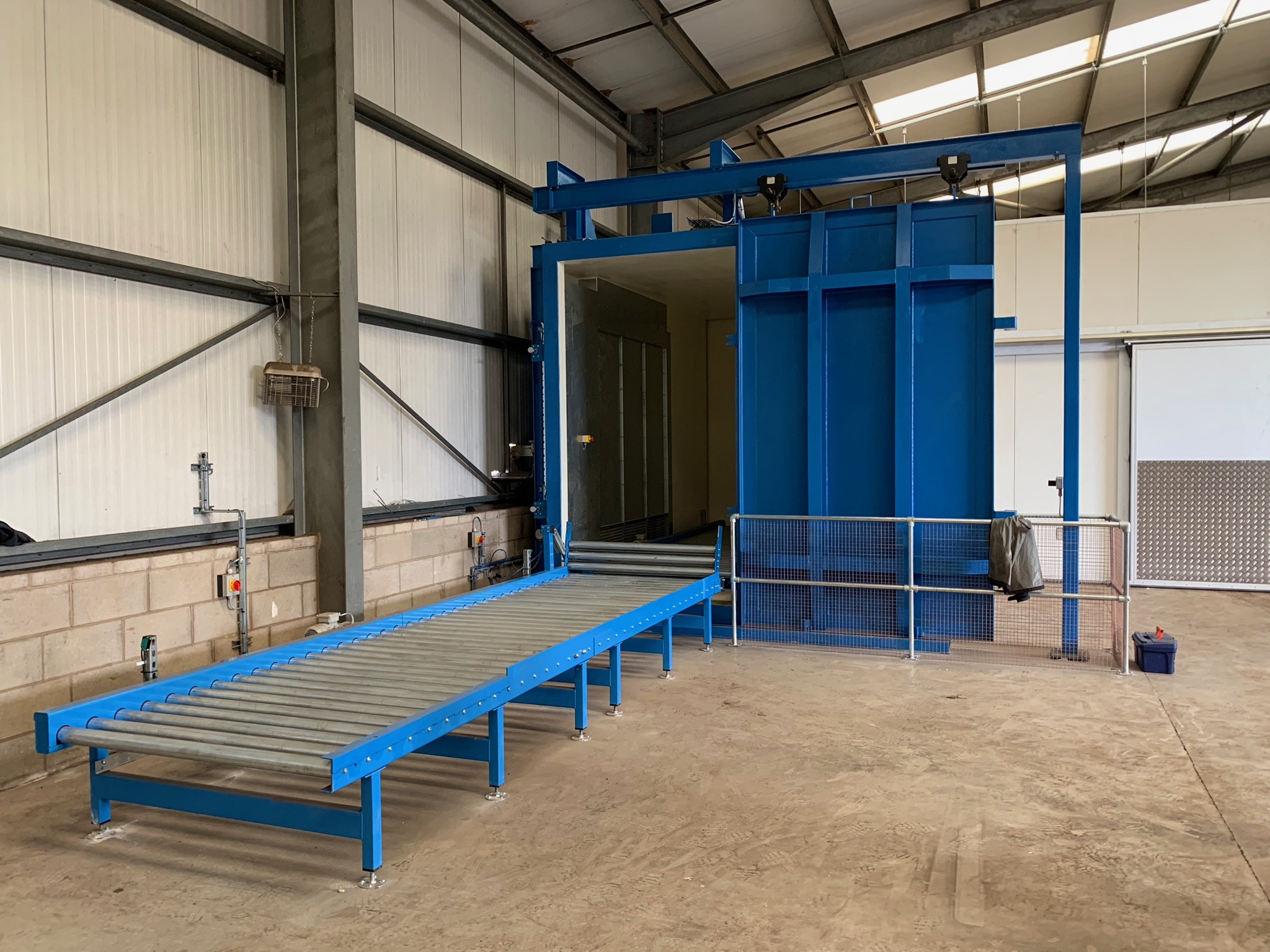
Vacuum Cooler Sizes for Lettuce Growers
The correct machine should be selected according to the actual production requirement.
Cold Change offers:
Growers can also view the complete Cold Change vacuum cooler range.
1 Pallet Vacuum Cooler for Lettuce
A 1 pallet vacuum cooler can provide a compact entry point into vacuum cooling.
It can be suitable for smaller growers, specialist producers, research facilities or businesses processing smaller batches.
2 Pallet Vacuum Cooler for Lettuce
A 2 pallet vacuum cooler can suit smaller and medium-sized lettuce farms.
Growers searching for a small vacuum cooler, 2 pallet lettuce vacuum cooler, 2 pallet vacuum chiller or small vegetable vacuum cooling machine can use this type of system as an entry point into commercial vacuum cooling.
4 Pallet Vacuum Cooler for Lettuce
A 4 pallet vacuum cooler provides increased batch capacity while retaining a relatively compact installation.
Four-pallet systems can be particularly useful for medium-volume lettuce and vegetable operations.
6 Pallet Vacuum Cooler for Lettuce
A 6 pallet vacuum cooler increases production capacity further and can be configured around the harvesting and packing requirements of the farm.
8 Pallet Vacuum Cooler for Lettuce
An 8 pallet vacuum cooler can suit larger commercial growers requiring substantial daily pre-cooling capacity without immediately moving to one of the largest installations.
10 Pallet Vacuum Cooler for Lettuce
A 10 pallet vacuum cooler provides significant batch capacity for high-volume fresh-produce businesses.
For large lettuce growers, rapid multi-pallet cooling can prevent the pre-cooling stage becoming a bottleneck during peak harvesting periods.
12 Pallet Vacuum Cooler for Lettuce
A 12 pallet vacuum cooler can handle large commercial batches and may be suitable for major lettuce farms, vegetable pack houses and centralised cooling facilities.
14 Pallet Vacuum Cooler for Lettuce
A 14 pallet vacuum cooler provides additional capacity for large-scale growers and packing operations.
16 Pallet Vacuum Cooler for Lettuce
A 16 pallet vacuum cooler moves into high-throughput commercial territory and can be designed around intensive harvesting and packing schedules.
18 Pallet Vacuum Cooler for Lettuce
An 18 pallet vacuum cooler can provide very high batch capacity for major fresh-produce operations.
20 Pallet Vacuum Cooler for Lettuce
A 20 pallet vacuum cooler provides very high capacity for major growers, processors, exporters and fresh-produce distribution businesses.
Cold Change also offers a 20 pallet Eco Model vacuum cooler for customers considering alternative high-capacity configurations.
How Do I Choose the Correct Size Vacuum Cooler?
Choosing a vacuum cooling machine solely by pallet count can be misleading.
Two farms loading the same number of pallets may have completely different cooling requirements.
Important information includes:
Number of pallets per hour
Weight per pallet
Lettuce variety
Incoming product temperature
Required final temperature
Desired cooling time
Number of batches per hour
Daily operating hours
Packaging and carton configuration
Electrical supply
Ambient conditions
Future production expansion
Cold Change can use this information to determine the required vacuum pump capacity, refrigeration capacity and chamber size rather than simply selecting equipment according to pallet quantity.
Why Vacuum Pump Capacity Matters
Vacuum pump capacity has a direct influence on how quickly chamber pressure can be reduced.
For a commercial lettuce farm, this is important because the objective isn’t simply to reach a low pressure.
The machine must reach the required operating conditions quickly enough to achieve the desired production cycle.
An undersized vacuum system may increase cycle time and reduce the number of pallets that can be processed each hour.
Why Refrigeration Capacity Matters
A vacuum pump alone doesn’t make an effective vegetable vacuum cooler.
When moisture evaporates from lettuce under vacuum, the resulting water vapour needs to be managed.
Commercial vacuum coolers therefore require correctly selected refrigeration and condensing equipment.
For large lettuce farms, insufficient refrigeration capacity can compromise cooling performance and cycle times.
The complete system should therefore be engineered around:
Product weight + starting temperature + target temperature + required cycle time
rather than simply chamber dimensions.
Packaging and Lettuce Vacuum Cooling
Packaging can influence vacuum cooling performance.
Cartons, crates, plastic films and pallet configuration should therefore be considered when designing a lettuce cooling system.
Cold Change can assess:
Existing lettuce cartons
Plastic crates
Pallet dimensions
Pallet weights
Wrapping
Packaging ventilation
Daily production
Harvest temperatures
Required dispatch temperature
This allows the vacuum cooler to be designed around the customer’s existing production process.
Automatic Vacuum Cooling for Lettuce Pack Houses
Modern lettuce pack houses increasingly depend on automation and repeatability.
Cold Change vacuum coolers can incorporate:
Automatic operation
PLC control
Touch-screen HMI
Automatic doors
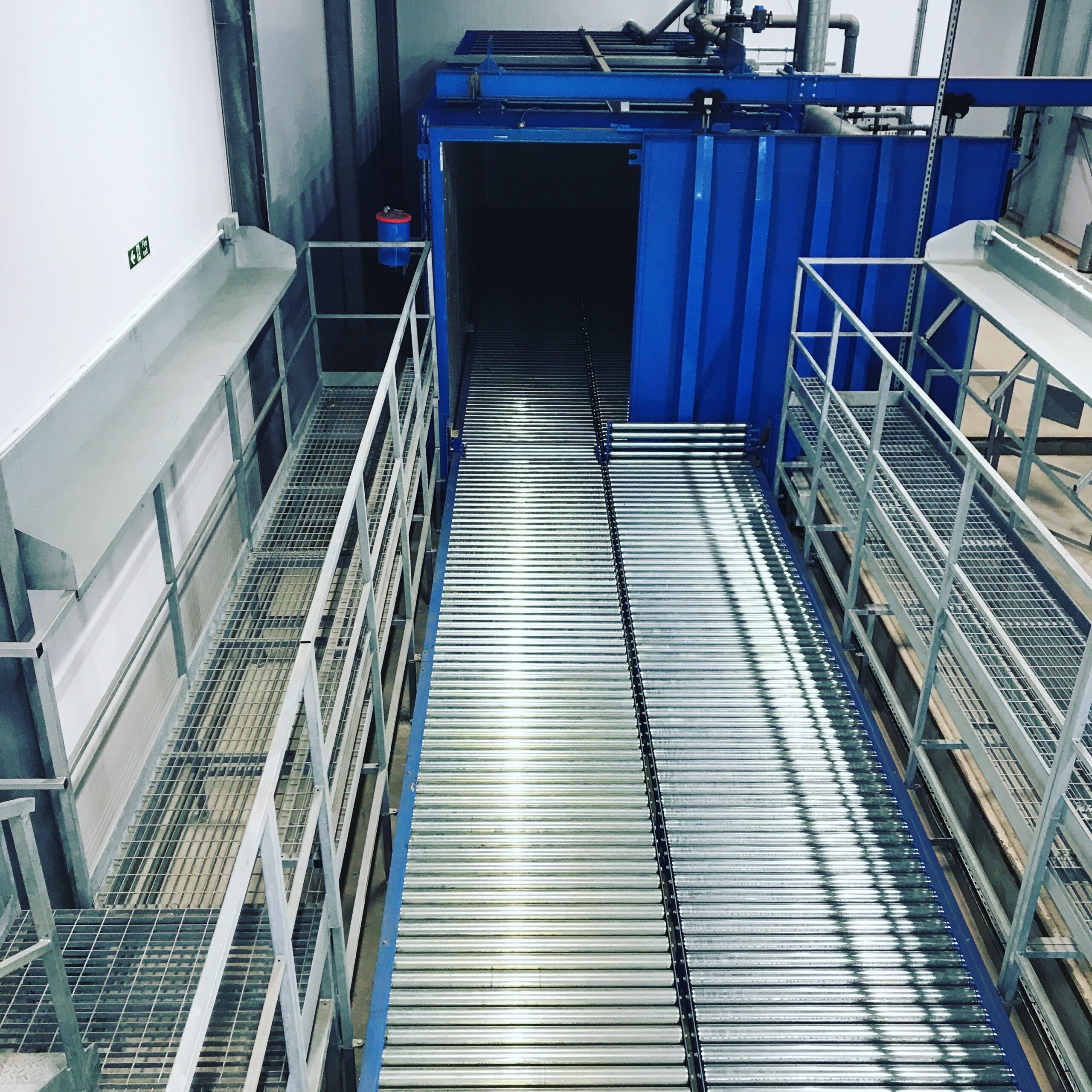
Conveyor loading
Automatic unloading
Product temperature monitoring
Vacuum monitoring
Remote monitoring
Fault alerts
A typical automated process could therefore be:
Harvest → Pack → Palletise → Vacuum Cool → Cold Store → Dispatch
For larger facilities, pallets can potentially enter and leave the vacuum cooler automatically as part of the pack-house material-handling system.
Monitoring Lettuce Cooling Performance
Data is becoming increasingly important throughout the fresh-produce industry.
Modern vacuum cooling equipment can provide information relating to:
Cycle times
Product temperatures
Vacuum levels
Cooling performance
Energy consumption
Fault conditions
Maintenance requirements
For large growers, this information can help identify production bottlenecks and changes in cooling performance.
Can an Existing Lettuce Farm Install a Vacuum Cooler?
Yes.
A vacuum cooler doesn’t necessarily need to be incorporated when a lettuce farm or pack house is originally constructed.
Systems can potentially be installed alongside existing packing and cold-storage facilities, subject to available space and services.
Important considerations include:
Available floor space
Electrical supply
Refrigeration arrangement
Drainage
Pallet access
Forklift routes
Conveyor integration
Condenser location
Service access
Cold Change can also provide customised solutions where standard dimensions don’t suit a particular installation.
Vacuum Cooling for New Lettuce Farms
For a new lettuce development, considering the cooling system during the design stage provides even greater flexibility.
The vacuum cooler can be integrated into the product flow from the beginning.
A typical cold-chain sequence could be:
Harvesting → Packing → Palletising → Vacuum Cooling → Cold Storage → Loading → Distribution
Designing the system at this stage also allows growers to consider future production growth.
Vacuum Cooling Lettuce in Australia
Australian lettuce growers can face significant post-harvest cooling challenges, particularly where produce is harvested during warm conditions or travels substantial distances between growing regions, distribution centres and customers.
Growers searching for a vacuum cooler Australia, lettuce vacuum cooler Australia, vegetable vacuum cooler Australia or vacuum cooling equipment Australia can incorporate rapid pre-cooling directly into the pack house.
This allows field heat to be removed before refrigerated storage and transportation.
Vacuum Cooling Lettuce in New Zealand
For lettuce growers in New Zealand, rapid pre-cooling can form an important part of a tightly controlled post-harvest cold chain.
Growers searching for a vacuum cooler New Zealand, lettuce vacuum cooler New Zealand or vegetable vacuum cooler New Zealand can select systems around individual farm throughput, pallet dimensions and required product temperatures.
Vacuum Cooling Lettuce in the UK
UK growers searching for a vacuum cooler UK, lettuce vacuum cooler UK, vegetable vacuum cooler UK or vacuum cooling equipment UK can use vacuum cooling as the rapid pre-cooling stage before refrigerated storage.
Cold Change is a UK-based cooling-equipment supplier offering vacuum cooling systems for domestic and international fresh-produce applications.
Vacuum Cooling Lettuce in the USA
The United States has a major commercial lettuce-growing industry and vacuum cooling has a long history within large-scale lettuce production.
Growers searching for a vacuum cooler USA, lettuce vacuum cooler USA, iceberg lettuce vacuum cooler USA or commercial vegetable vacuum cooler can use multi-pallet systems for large-scale harvesting and packing operations.
Vacuum Cooling Lettuce in Canada
For Canadian growers searching for a vacuum cooler Canada, lettuce vacuum cooler Canada or vegetable vacuum cooling equipment Canada, rapid pre-cooling can help establish the cold chain immediately following harvest.
Systems can be configured around local production volumes, pallet sizes and temperature requirements.
What Does a Lettuce Vacuum Cooler Cost?
Searches for vacuum cooler price, vacuum cooler cost, lettuce vacuum cooler price, vegetable vacuum cooler priceand vegetable vacuum cooler for sale are common.
However, there isn’t one meaningful price for every installation.
Cost depends on factors including:
Chamber dimensions
Pallet capacity
Vacuum pumping capacity
Refrigeration capacity
Door configuration
Controls
Electrical specification
Condenser configuration
Automation
Installation requirements
Optional monitoring systems
The better question is:
What vacuum cooler specification is required to achieve the target cooling performance and hourly production capacity?
Once those requirements are established, an accurate quotation can be prepared.
Vacuum Cooler for Sale
Growers searching for a vacuum cooler for sale should compare more than the initial purchase price.
A commercial vacuum cooler becomes part of the farm’s production process.
Important considerations include:
Cooling performance + cycle time + reliability + energy consumption + service support + spare parts + future capacity
A cheaper machine that cannot achieve the required production throughput can ultimately prove considerably more expensive than correctly specified equipment.
New and Used Vacuum Coolers
Depending on availability, growers may consider both new vacuum coolers and used vacuum coolers.
A new system can be designed around the exact production requirement.
A suitable used machine may provide an alternative where chamber size, refrigeration capacity and vacuum capacity correctly match the application.
Anyone considering a used lettuce vacuum cooler, used vegetable vacuum cooler or second-hand vacuum coolershould examine considerably more than the chamber dimensions.
Vacuum pump condition, refrigeration system, controls, vessel condition, door sealing and actual cooling capacity all matter.
What Other Vegetables Can Be Vacuum Cooled?
Although lettuce is one of the best-known applications, vacuum cooling can be suitable for numerous other fresh products.
Applications can include:
Iceberg lettuce
Romaine lettuce
Cos lettuce
Leafy greens
Spinach
Broccoli
Cauliflower
Celery
Asparagus
Herbs
Mushrooms
Flowers
Selected fresh produce
This means a vegetable vacuum cooling system may potentially be used across several different crops during different harvesting seasons.
For diversified growers, that can significantly improve utilisation of the equipment.
What Should Growers Look for in a Vacuum Cooler Manufacturer?
When comparing a vacuum cooler manufacturer, vacuum cooler supplier or vacuum cooling company, headline pallet capacity shouldn’t be the only consideration.
Growers should establish:
Can the supplier calculate the required refrigeration capacity?
Is vacuum-pump capacity appropriate for the required cycle?
Has the system been designed for the actual product load?
What final product temperature can be achieved?
How will the machine integrate into the pack house?
Is remote technical support available?
Are replacement parts available?
Can the machine be serviced locally?
Can operating data be monitored?
Can the system accommodate future production growth?
A vacuum cooler is part of the production process.
Reliability, serviceability and correct sizing can therefore be just as important as initial purchase price.
Is Vacuum Cooling the Best Way to Chill Lettuce From Harvest?
There are several effective methods of pre-cooling lettuce.
Cold rooms remain essential for refrigerated storage, while forced-air cooling and hydrocooling can provide effective solutions for suitable applications.
However, where the priorities are:
Rapid Cooling + Uniform Cooling + High Throughput + Product Quality + Cold-Chain Performance
vacuum cooling can offer significant advantages.
For commercial growers handling substantial quantities of lettuce, vacuum cooling lettuce provides an established method of rapidly removing field heat before refrigerated storage and distribution.
Whether you’re searching for a lettuce vacuum cooler, iceberg lettuce vacuum cooler, vacuum cooler for lettuce, vegetable vacuum cooler, vacuum cooling machine, lettuce pre cooler, vacuum pre cooler, commercial vacuum cooler or complete post harvest cooling system, the correct machine should be selected around the actual production requirement.
Frequently Asked Questions About Vacuum Cooling Lettuce
What is vacuum cooling?
Vacuum cooling is a rapid pre-cooling process in which pressure is reduced inside a sealed chamber. This allows a small quantity of moisture within the product to evaporate at a low temperature, removing heat and rapidly reducing product temperature.
Can lettuce be vacuum cooled?
Yes. Lettuce is one of the best-established commercial applications for vacuum cooling.
Can iceberg lettuce be vacuum cooled?
Yes. Iceberg lettuce vacuum cooling is widely associated with commercial vacuum pre-cooling because lettuce’s high moisture content and leafy structure make it particularly suitable for the process.
What is a lettuce vacuum cooler?
A lettuce vacuum cooler is a sealed vacuum chamber equipped with vacuum pumps, refrigeration equipment, controls and associated components specifically designed to rapidly remove heat from harvested lettuce.
Is vacuum cooling faster than cold-room cooling?
Vacuum cooling is specifically designed as a rapid pre-cooling process, while a conventional cold room is normally designed primarily to maintain already-chilled product at the required storage temperature.
Can vacuum cooling help extend lettuce shelf life?
Rapid removal of field heat and early establishment of the cold chain can help maintain lettuce quality and contribute to longer commercially useful shelf life.
What size lettuce vacuum cooler do I need?
The correct size depends on pallet weight, pallets per hour, starting temperature, required final temperature, daily operating hours and desired cooling time.
Cold Change offers 1 pallet, 2 pallet, 4 pallet, 6 pallet, 8 pallet, 10 pallet, 12 pallet, 14 pallet, 16 pallet, 18 pallet and 20 pallet vacuum coolers.
Can an existing lettuce farm install a vacuum cooler?
Yes. Vacuum cooling equipment can potentially be integrated with existing harvesting, packing and refrigerated storage facilities.
Can Cold Change manufacture a custom lettuce vacuum cooler?
Yes. Systems can be configured around specific pallet dimensions, production capacities, incoming temperatures, required final temperatures, loading arrangements and site requirements.
Find the Right Vacuum Cooler for Your Lettuce Farm
The objective of pre-cooling is simple:
Remove field heat as quickly and efficiently as possible and establish the cold chain immediately after harvest.
For commercial lettuce growers, vacuum cooling lettuce, vacuum chilling lettuce and vacuum precooling lettuce can provide an extremely rapid route from harvest temperature towards the required storage temperature.
Cold Change can assess your:
Pallet weight + lettuce per pallet + harvest temperature + required final temperature + pallets per hour + operating hours
and recommend an appropriate cooling system.


