

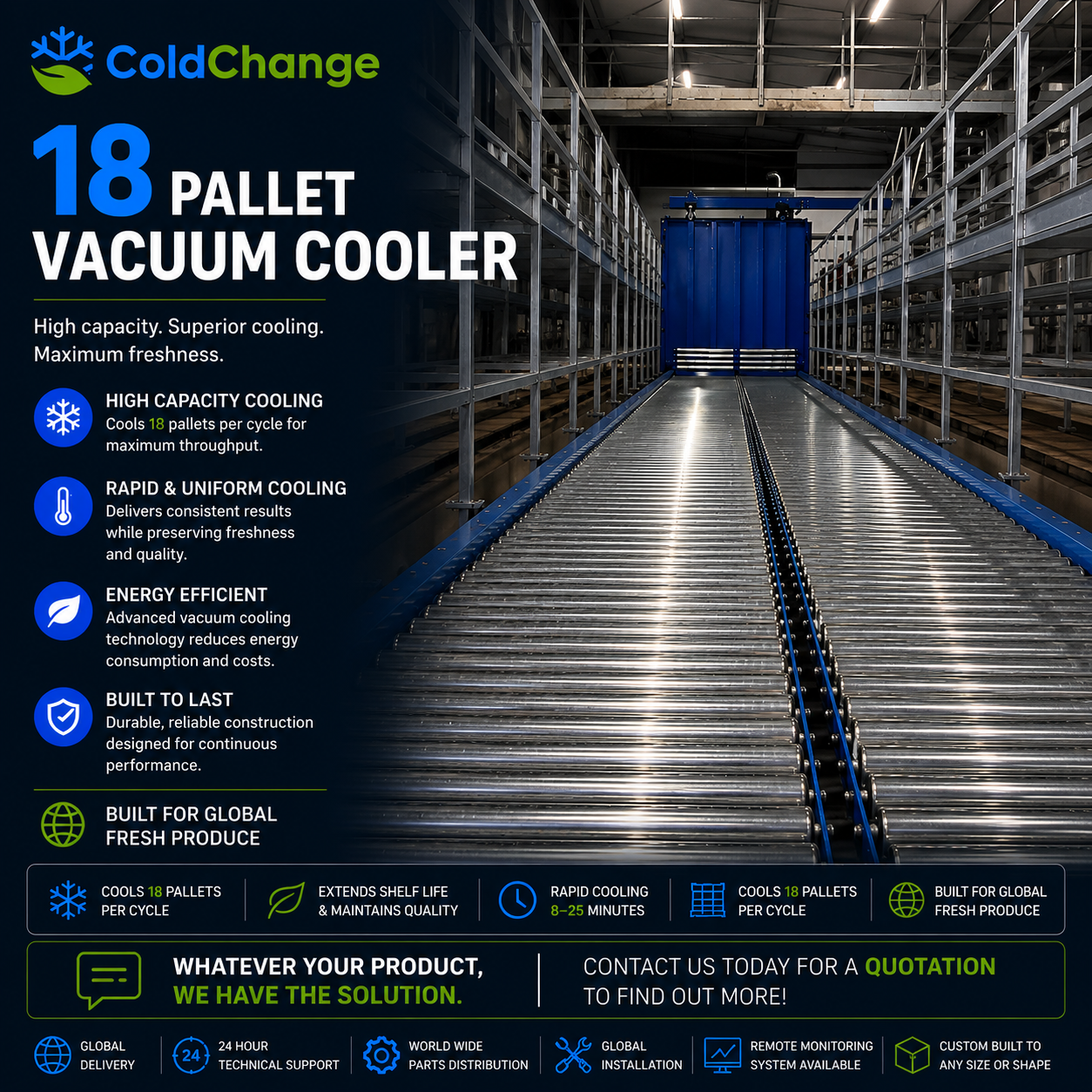
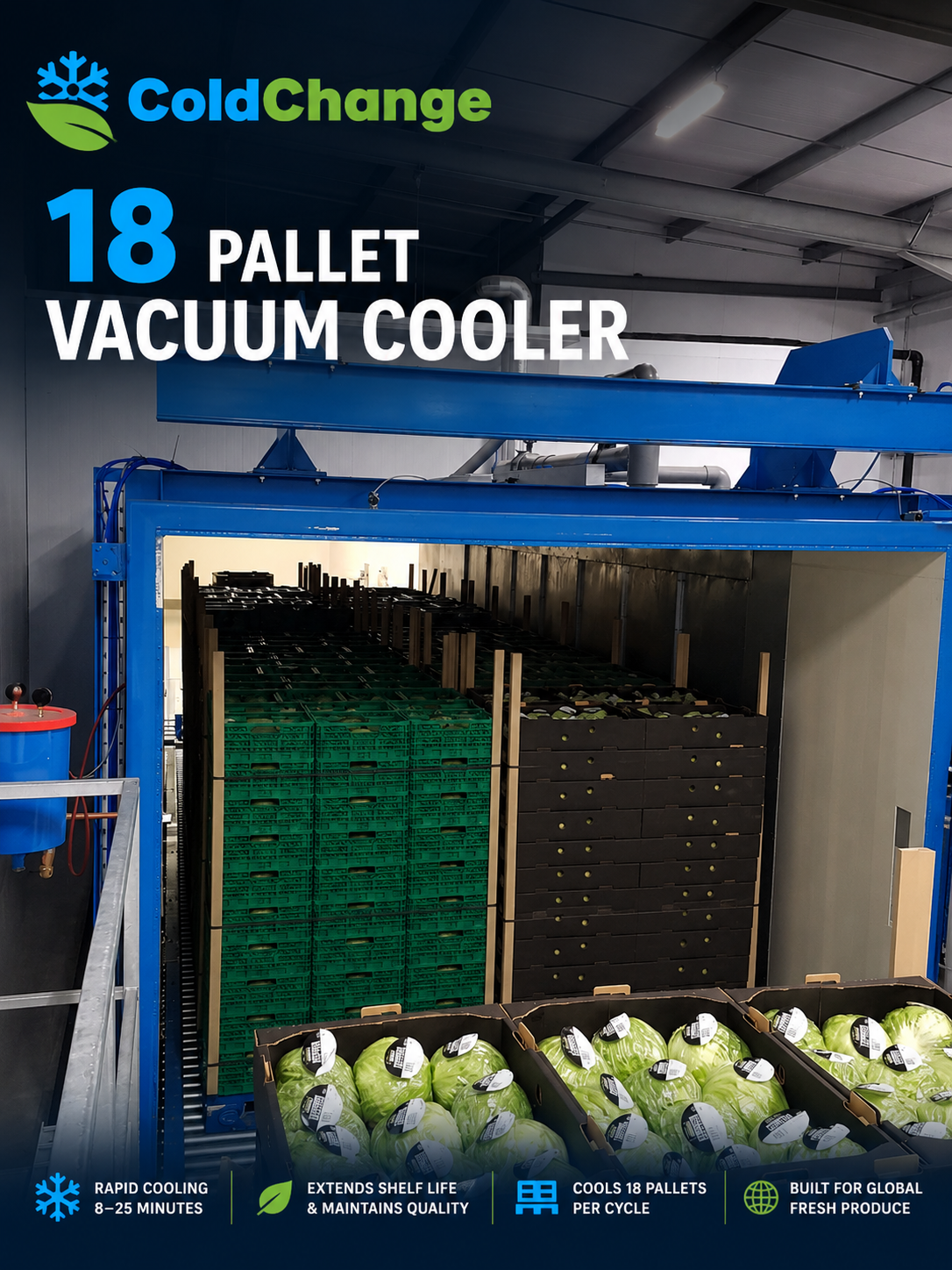
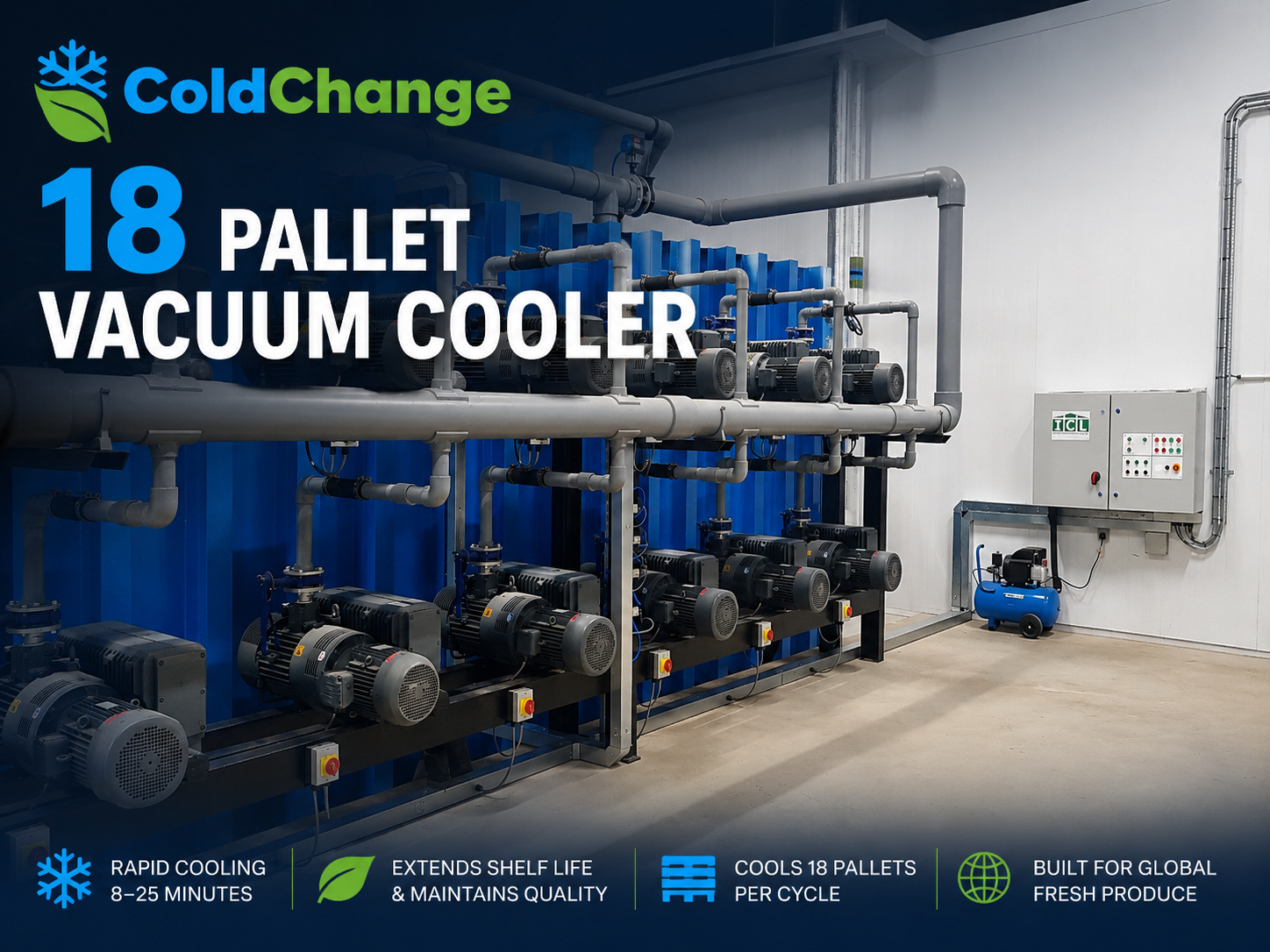
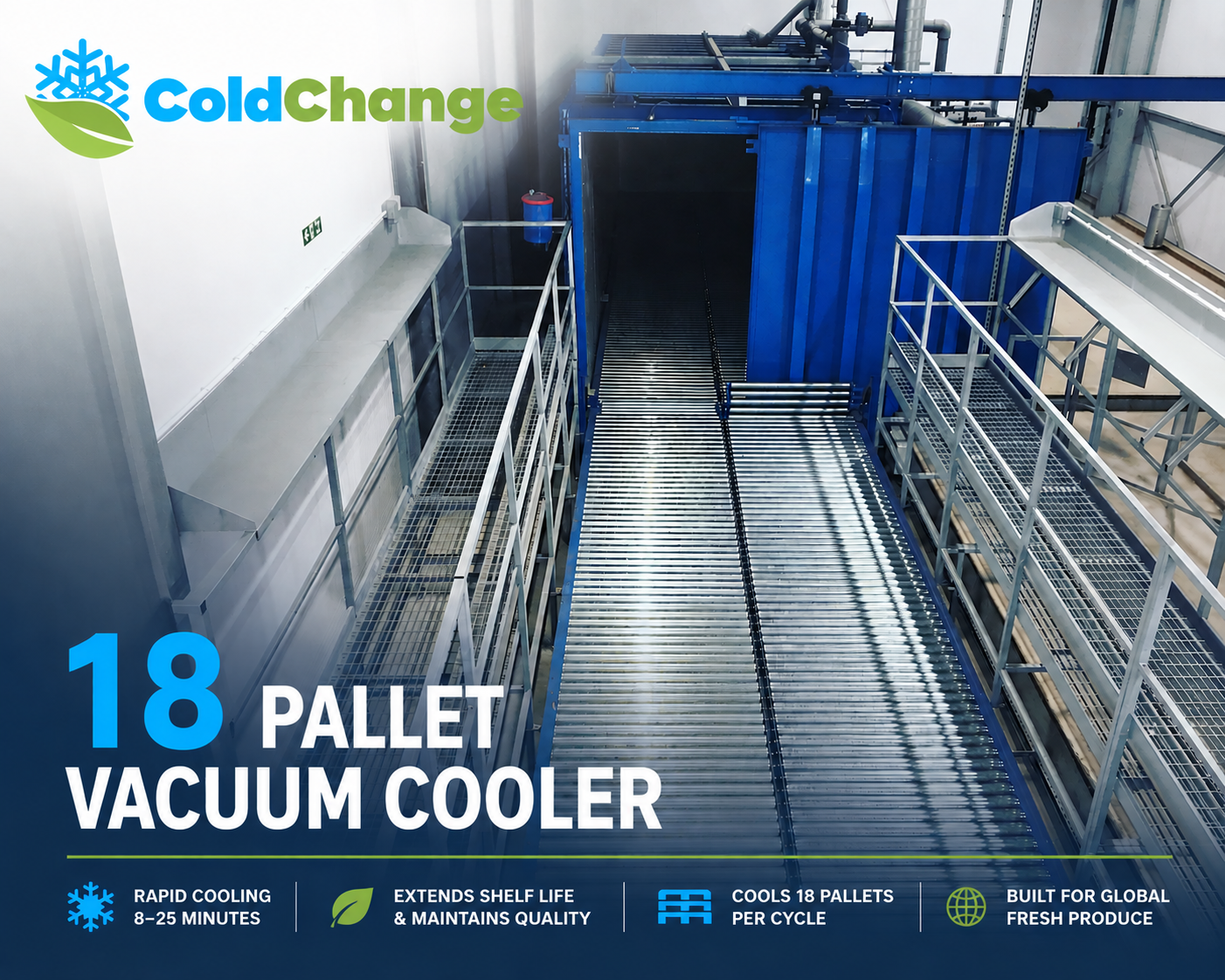
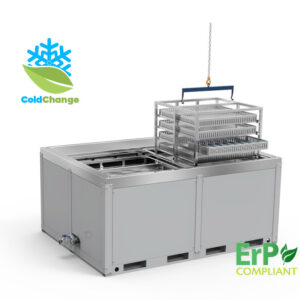
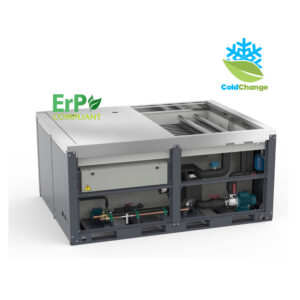
18 Pallet Eco Vacuum Cooler
This Eco model is designed for very high-throughput produce and food operations where eighteen-pallet batches require careful coordination of vacuum capacity, refrigeration duty and cycle scheduling.
Compare this configuration with the standard 18 Pallet Vacuum Cooler using the same product, pallet load, temperature targets and production schedule.
Eco engineering focus
- Variable-speed vacuum pumping across the evacuation cycle
- Refrigeration plant selected from the real product and pull-down requirement
- Repeatable PLC/HMI control strategies
- Utility and site-condition review before final equipment selection
Project sizing
The final system will be matched to product, load, infeed and target temperatures, cycle frequency, packaging and ambient conditions. Energy-performance statements will only be used where technically supportable.
18 Pallet ECO Vacuum Cooler
The 18 Pallet ECO Vacuum Cooler is intended for very high-throughput operations that need eighteen-pallet batch capacity and want energy use considered across the complete cooling process. The chamber, vacuum system, condensation equipment and controls are engineered around the actual product, packaging, shift pattern and site conditions.
ECO identifies a project-specific engineering approach, not a universal percentage saving. The design review considers how vacuum demand changes through the cycle, how refrigeration duty recovers between batches and how the machine will operate during peak, typical and reduced production. This provides a defined basis for comparison with the standard 18 Pallet Vacuum Cooler.
Plan the complete production flow
At eighteen pallets per batch, cooler performance must be considered together with harvesting, packing, pallet staging and dispatch. Cold Change reviews the required pallets per hour, expected batches per shift and the time available for loading and unloading. The aim is to prevent the cooler from becoming isolated from the production rhythm around it.
The assessment can include peak intake periods, changes in product mix, sanitation windows, shift handovers and planned idle time. Where the incoming rate varies, the project basis should identify both the maximum demand and the normal operating case. This makes it possible to assess equipment selections against the way the plant is expected to work, rather than against pallet capacity alone.
Variable-speed vacuum system
The ECO design can use variable-speed vacuum pumping so that available motor output is controlled through the evacuation sequence. Pump selection and control are matched to the required pressure profile, product load and process stages. The engineering objective is to provide the required vacuum duty without assuming that every stage of every batch needs the same operating point.
Any energy comparison needs an agreed measurement boundary. Pump motor consumption on its own does not describe the complete system: refrigeration, auxiliaries, cycle frequency, product load and idle periods also matter. Cold Change therefore avoids applying a fixed saving to all eighteen-pallet installations and instead defines the calculation or measurement basis for the individual project.
Condensation and refrigeration coordination
Moisture released during vacuum cooling becomes vapour that must be managed by the condensing system. The refrigeration arrangement is selected from the expected vapour load, starting and target conditions, batch frequency, ambient design conditions and required recovery between cycles.
For consecutive high-volume batches, the design review considers the duty over the production period as well as the demand within an individual cycle. Where throughput changes during a shift, peak and partial-load cases can be evaluated separately. Refrigerant selection, heat rejection and local compliance requirements are confirmed for the installation country and site.
Loading, doors and pallet movement
An eighteen-pallet chamber needs a practical route for pallet movement. The layout review covers the approach to the chamber, door clearance, forklift or pallet-handling access, staging space and the path towards cold storage or dispatch. Loading and unloading time should be included in the production calculation.
Single-door, two-door, manual-loading and conveyor-interface arrangements can be reviewed where specified. These are project choices rather than automatic inclusions. Door operation, safety interfaces, drainage, floor levels and maintenance access must be coordinated with the building and material-handling plan.
Controls and operating records
PLC and HMI controls manage the selected process stages, recipes, alarms and operator information. Recipes can be established for different products or load conditions once the necessary application data is available. User access levels and protected set-point ranges can also be defined during the controls review.
For high-throughput sites, operating records can help distinguish product variation from machine or scheduling issues. Data logging, energy metering, remote support and connection to other plant systems can be specified as project options. The required signals, data ownership and network arrangements should be agreed before manufacture.
Product and packaging assessment
Vacuum cooling suitability depends on how the product behaves under reduced pressure and whether the packaging permits vapour movement. Product type, moisture behaviour, pack format, liners, vent area, pallet build and load uniformity all affect the cooling response.
Application data and, where appropriate, product trials help define the operating basis. A change in product, pallet weight or packaging may require a different recipe or alter the expected result. Batch weights, target temperatures and performance commitments are therefore confirmed in the quotation rather than inferred from the eighteen-pallet model name.
Availability and maintenance planning
Large central packhouses may depend heavily on one cooling line, so service access and maintenance planning should be considered during layout development. The review can cover access to pumps, refrigeration components, valves and instruments, together with the site’s preferred maintenance clearances and lifting routes.
Where production risk requires it, duty arrangements, standby philosophy, critical spares and remote diagnostic options can be discussed. The appropriate level depends on operating hours, local technical support and the consequence of downtime. No redundancy configuration is assumed until it is selected and documented.
Comparing ECO and standard configurations
A useful comparison between the ECO and standard eighteen-pallet designs should use the same product, batch load, production schedule and site conditions. It should identify the proposed vacuum equipment, condensation system, controls, auxiliaries and operating assumptions for each option.
Energy can then be assessed over a defined number of batches or production period. Where measured operating data already exists, it may provide a practical baseline. The most appropriate configuration will depend on throughput stability, operating hours, electrical constraints, product mix and the customer’s project priorities.
Information required for quotation
- Products and varieties to be cooled
- Typical and maximum pallet weights
- Pallet dimensions, packaging and venting details
- Starting and target product temperatures
- Required pallets per hour and batches per shift
- Peak, typical and seasonal production patterns
- Loading method, door preference and conveyor requirements
- Electrical supply, utilities and ambient design conditions
- Installation space, access and maintenance constraints
- Controls, monitoring and plant-integration requirements
These inputs allow the chamber, vacuum pumps, refrigeration system and controls to be assessed as one process. Final dimensions, component selections, operating commitments and commercial terms are confirmed in the project quotation.
Compare the standard 18 Pallet Vacuum Cooler, view the complete vacuum cooler range, or request a quotation with your product and production details.


المراجعات
لا توجد مراجعات بعد.